
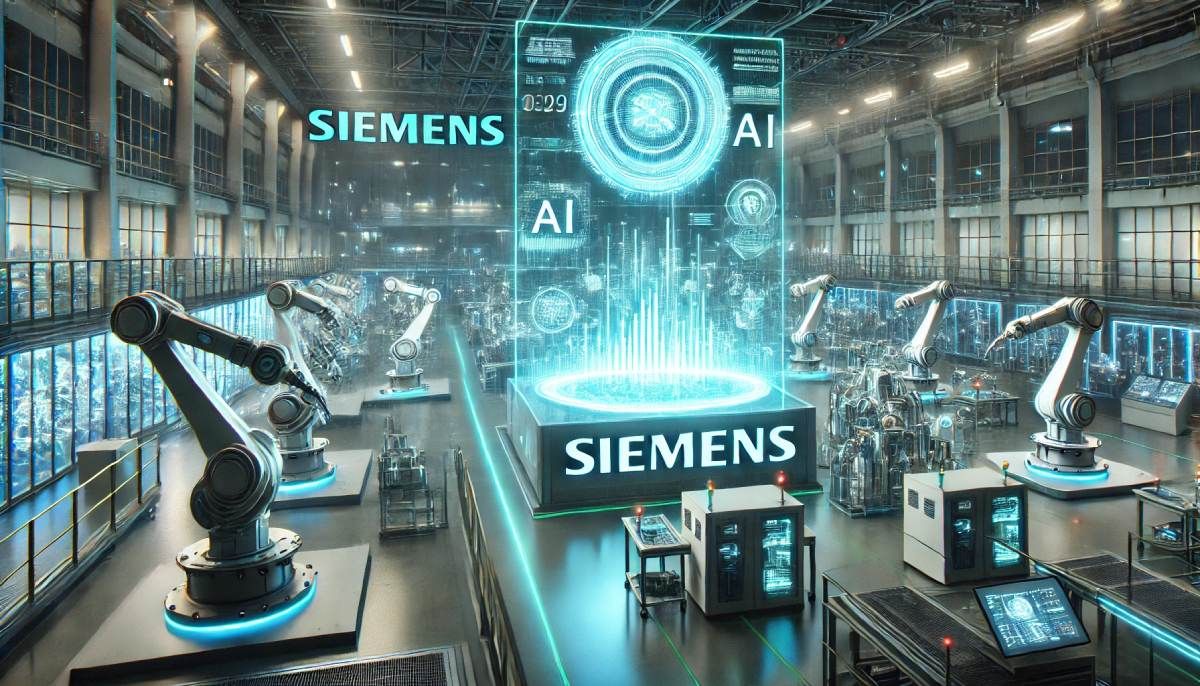
Manufacturing is at an inflection point unlike any in its modern history. For decades, industrial progress was measured in increments—a faster assembly line here, a leaner supply chain there. Today, the convergence of artificial intelligence, Industrial Internet of Things (IIoT), edge computing, and advanced robotics is not merely improving factories; it is redefining what a factory can be. Smart manufacturing represents the shift from automated production to autonomous, self-optimizing, and data-driven operations—and the businesses that embrace it will define the competitive landscape of the next decade.
From Automation to Autonomy
The first wave of industrial digitization connected machines and captured data. The next wave acts on that data in real time. Smart factories are evolving toward what industry leaders call autonomous operations, where systems detect anomalies, adjust parameters, and schedule maintenance without human intervention.
This transition rests on three foundational capabilities:
- Pervasive sensing: Dense networks of IIoT sensors capture temperature, vibration, pressure, and throughput data across every asset.
- Edge intelligence: Processing happens close to the machine, enabling microsecond decision-making without round trips to the cloud.
- Closed-loop learning: Machine learning models continuously refine themselves using production data, improving accuracy over time.
The result is a manufacturing environment that behaves less like a fixed pipeline and more like a living system—responsive, adaptive, and continuously improving.
AI as the Operating System of the Factory
Artificial intelligence has moved from pilot projects to the production floor. Predictive maintenance remains the flagship use case, with AI models anticipating equipment failures days or weeks in advance and reducing unplanned downtime by significant margins. But the ambition extends far beyond maintenance.
Key AI-Driven Capabilities
| Predictive quality | Detects defects in-process using vision and sensor fusion | Lower scrap rates and fewer recalls |
| Generative process design | Optimizes production parameters and layouts | Faster ramp-ups and higher yields |
| Demand-aware scheduling | Aligns production with real-time demand signals | Reduced inventory and lead times |
| Digital twins | Simulates assets and lines before physical changes | De-risked investment and faster innovation |
What unites these capabilities is a shift in emphasis: AI is no longer a layer bolted onto legacy processes. It is becoming the operating logic through which factories plan, produce, and improve.
The Rise of the Collaborative and Autonomous Workforce
Robotics is undergoing its own transformation. Traditional industrial robots were caged, fixed, and task-specific. The future belongs to collaborative robots (cobots), autonomous mobile robots (AMRs), and increasingly capable humanoid platforms that move freely through facilities, handle varied tasks, and work safely alongside people.
Critically, this is not a story of replacement but of reallocation. As robots absorb repetitive, ergonomically taxing, and hazardous work, human roles shift toward supervision, exception handling, programming, and continuous improvement. The factory of the future needs technicians who can interpret data, tune models, and orchestrate fleets of machines—skills that demand new investment in workforce development.
Interoperability and the Data Backbone
Smart manufacturing succeeds or fails on the quality of its data backbone. Fragmented systems, proprietary protocols, and siloed OT/IT environments remain the biggest obstacles to scale. The industry is responding with open standards, unified namespaces, and architectures that treat operational technology and information technology as a single continuum.
Key priorities for manufacturers building this backbone include:
Organizations that solve interoperability early will compound their advantages; those that defer it will find every subsequent initiative slower and costlier.
Sustainability as a Design Principle
The future of smart manufacturing is inseparable from sustainability. Energy-aware production scheduling, real-time emissions monitoring, circular material flows, and AI-optimized resource consumption are moving from corporate pledges to operational realities. Smart factories are increasingly expected to demonstrate verifiable environmental performance—and the same sensor networks and analytics that drive efficiency also deliver the audit-grade data that regulators and customers now demand.
What Leaders Should Do Now
The path to smart manufacturing is incremental, not instantaneous. Organizations that succeed tend to follow a disciplined sequence: establish a clear business case tied to measurable outcomes, modernize connectivity and data infrastructure, prove value with focused pilots, then scale through repeatable platforms rather than one-off projects.
Three imperatives stand out:
- Invest in the data foundation first. Intelligence without clean, connected data is fiction.
- Design for people. Workforce enablement determines whether technology adoption sticks.
- Measure relentlessly. Tie every initiative to throughput, quality, cost, or sustainability metrics.
Conclusion
Smart manufacturing is not a distant vision—it is an active transition underway in leading facilities worldwide. The convergence of AI, IIoT, autonomous robotics, and interoperable data architectures is producing factories that are safer, more efficient, more sustainable, and far more responsive to market demand. The winners will not be those who adopt the most technology, but those who integrate it with clarity, discipline, and a genuine commitment to their people. The future of manufacturing is intelligent—and it is being built today.