
Unplanned downtime is one of the most persistent and costly challenges in industrial operations. Whether you run a manufacturing plant, a processing facility, or a logistics hub, every hour of idle equipment translates directly into lost production, missed deadlines, and eroded margins. Industry benchmarks consistently show that unplanned downtime can cost manufacturers tens of thousands of dollars per hour—and in heavy industries, significantly more. The good news is that most downtime is preventable. This guide outlines proven strategies for reducing industrial equipment downtime through preventive maintenance, smart technology adoption, and a culture of continuous improvement.
Understand the True Cost of Downtime
Before implementing solutions, organizations must quantify the problem. Downtime costs extend far beyond lost output. They include idle labor, expedited shipping fees, equipment restart costs, contractual penalties, and long-term reputational damage. A clear cost baseline helps justify investment in reliability initiatives and prioritizes which assets deserve attention first.
Operations teams should track key metrics such as Mean Time Between Failures (MTBF), Mean Time To Repair (MTTR), and Overall Equipment Effectiveness (OEE). These indicators reveal patterns and highlight where interventions will deliver the greatest return.
Adopt a Preventive and Predictive Maintenance Strategy
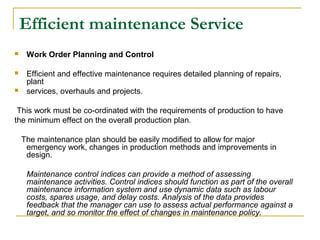
Reactive maintenance—fixing equipment only after it fails—is the single largest driver of unplanned downtime. Shifting toward a proactive model is the most impactful change most facilities can make.
Preventive Maintenance
Scheduled maintenance based on manufacturer recommendations and historical data reduces the likelihood of sudden failures. Lubrication schedules, component replacements, and calibration tasks should be documented and automated through a computerized maintenance management system (CMMS).
Predictive Maintenance
Predictive maintenance uses sensor data—vibration, temperature, acoustic emissions, and oil analysis—to detect early signs of degradation. Machine learning models can flag anomalies before they escalate into failures, allowing maintenance to be scheduled during planned pauses rather than emergency shutdowns.
- Vibration monitoring for rotating equipment such as motors, pumps, and compressors
- Thermal imaging to detect electrical faults and overheating bearings
- Oil analysis to track contamination and wear particles in lubricated systems
- Ultrasonic sensors to identify leaks and early-stage mechanical friction
Leverage Industrial IoT and Real-Time Monitoring
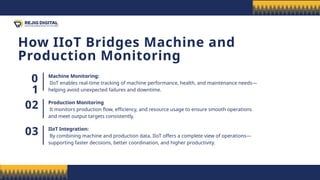
The Industrial Internet of Things (IIoT) has transformed how facilities monitor asset health. Connected sensors stream operational data to centralized dashboards, giving maintenance and operations teams real-time visibility into equipment condition. When thresholds are breached, automated alerts trigger rapid response—often before an operator would notice a problem.
Integration with enterprise systems such as ERP and CMMS platforms ensures that work orders are generated automatically and that spare parts are reserved in advance. This reduces the scramble that typically follows an unexpected failure.
Build a Robust Spare Parts and Inventory Program
Even the best maintenance strategy is undermined if critical components are unavailable when needed. Extended lead times for specialized parts can stretch a repair from hours into weeks. Facilities should classify spare parts by criticality and maintain strategic stock levels for high-risk items.
| Long-lead specialty components | Critical | Maintain on-site safety stock |
| Wear items and consumables | High | Automated reorder points |
| Standard fasteners and fittings | Medium | Bulk inventory with periodic audits |
| Redundant or legacy parts | Low | Vendor-managed or consignment |
Invest in Operator Training and Standardized Procedures
A significant portion of equipment failures stem from human error—improper operation, missed inspections, or incorrect maintenance procedures. Comprehensive training programs and clear standard operating procedures (SOPs) reduce these risks substantially.
Foster a Culture of Reliability and Continuous Improvement
Technology alone cannot eliminate downtime. Sustainable improvement requires leadership commitment, cross-functional collaboration, and a mindset that treats every failure as a learning opportunity. Root cause analysis (RCA) should be standard practice after significant downtime events, and findings should feed back into maintenance plans and design improvements.
Regular reliability reviews, shared performance dashboards, and incentives tied to uptime goals align teams around a common objective. When operators, maintenance technicians, and engineers collaborate on problem-solving, the results compound over time.
Conclusion
Reducing industrial equipment downtime is not a one-time project—it is an ongoing discipline. By understanding the true cost of failure, implementing preventive and predictive maintenance, embracing IIoT monitoring, securing critical spares, training teams, and cultivating a reliability culture, organizations can dramatically improve uptime and protect their bottom line. The most successful facilities treat reliability as a strategic asset, investing continuously in people, processes, and technology to keep equipment running when it matters most.