
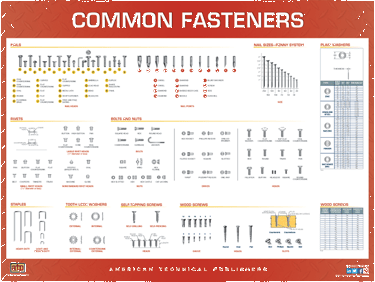
Industrial fasteners are the unsung heroes of modern engineering. From towering steel structures to precision medical devices, these small but critical components hold together the machinery, infrastructure, and products that define contemporary life. For engineers, procurement specialists, and manufacturers, understanding the distinctions between fastener types is essential to ensuring structural integrity, safety, and cost efficiency. This article examines the most common categories of industrial fasteners and the applications in which each excels.
Why Fastener Selection Matters
Selecting the wrong fastener can compromise a build, accelerate corrosion, or lead to catastrophic failure under load. Factors such as material composition, thread type, tensile strength, and environmental exposure all influence performance. A strategic approach to fastener selection begins with a clear understanding of the primary categories available.
Threaded Fasteners
Threaded fasteners are the most widely used category in industrial assembly, relying on helical threads to convert rotational motion into clamping force. They are generally removable and reusable, making them ideal for applications requiring maintenance or disassembly.
Bolts and Screws
Bolts are typically paired with a nut and are designed to clamp two or more unthreaded components together. Screws, in contrast, form their own threads or engage pre-tapped holes. Both are available in a vast range of grades, coatings, and head styles.
- Hex bolts: Heavy structural connections, machinery assembly, and construction frameworks.
- Socket head cap screws: Precision machinery and tooling where a compact, high-strength fastening point is required.
- Machine screws: Electronics, appliances, and light mechanical assemblies.
- Self-tapping screws: Sheet metal, plastics, and wood where pre-drilling is impractical.
Nuts and Washers
Nuts provide the mating thread for bolts, while washers distribute load and protect surfaces. Lock nuts and lock washers are commonly used in high-vibration environments such as automotive and aerospace assemblies.
Non-Threaded Fasteners
Non-threaded fasteners offer permanent or semi-permanent joints and are often chosen for speed of assembly or where vibration would loosen threaded connections.
Rivets
Rivets create permanent joints by deforming one end of the fastener after insertion. They are lightweight, reliable, and ideal for high-vibration environments.
- Solid rivets: Aircraft structures and heavy structural steel.
- Blind (pop) rivets: Sheet metal enclosures, HVAC ductwork, and automotive body panels.
- Structural rivets: Bridges and load-bearing frameworks requiring high shear strength.
Pins and Retaining Rings
Pins—including dowel, cotter, and clevis pins—align components or prevent movement. Retaining rings secure parts on shafts and in bores without threads, simplifying assembly and disassembly.
Anchors and Concrete Fasteners
Anchors are designed to transfer loads into masonry, concrete, or brick. Their applications range from securing shelving to anchoring heavy industrial equipment.
- Wedge anchors: Heavy machinery, structural supports, and racking systems.
- Sleeve anchors: Medium-duty anchoring in cracked or solid concrete.
- Adhesive anchors: High-load applications where vibration or close edge distances are present.
Specialty Fasteners
Certain applications demand fasteners engineered for extreme conditions or tamper resistance.
- Springs and clips: Quick-assembly retention in consumer products and automotive interiors.
- Semis and lock fasteners: High-security and tamper-resistant assemblies.
- Threaded inserts: Reinforcing threads in plastics and soft metals.
- Standoffs and spacers: PCB mounting and electronic enclosures.
Comparative Overview
The following table summarizes key characteristics to guide selection across common fastener categories.
| Bolts and Screws | Threaded | Reusable | Machinery, structural steel, electronics |
| Rivets | Permanent deformation | Not reusable | Aerospace, sheet metal, automotive |
| Pins | Alignment/interference | Often reusable | Hinges, linkages, positioning |
| Anchors | Expansion or adhesion | Limited | Concrete and masonry anchoring |
| Retaining Rings | Groove seating | Reusable | Shaft and bore retention |
Material and Coating Considerations
Fastener performance depends as much on material as on geometry. Stainless steel offers corrosion resistance for marine and food-processing environments. Carbon steel with zinc or hot-dip galvanized coatings delivers economical strength for construction. Alloy steel grades provide high tensile strength for critical structural joints, while brass and nylon serve electrical and lightweight applications respectively.
Conclusion
Mastering the landscape of industrial fasteners empowers engineers and procurement teams to specify components that balance strength, durability, and cost. Whether the requirement is a permanent riveted aircraft skin or a serviceable bolted machine frame, selecting the correct fastener type is fundamental to safe and efficient design. Investing time in fastener specification at the design stage consistently pays dividends across the product lifecycle.