
Industrial automation is no longer a futuristic concept reserved for sprawling manufacturing giants. It is the operational backbone of modern production, logistics, energy, and utilities. For businesses evaluating their first foray into automation—or for professionals seeking a structured overview—understanding the core components, architectures, and trade-offs is essential. This guide provides a clear, professional introduction to industrial automation systems, from sensors and controllers to the strategic decisions that determine success.
What Is Industrial Automation?
Industrial automation is the use of control systems—such as computers, robots, and information technologies—to handle different processes and machinery in an industry to replace human intervention. The goal is not simply to reduce labor costs. Automation delivers consistency, throughput, safety, and traceability at levels that manual operations cannot match.
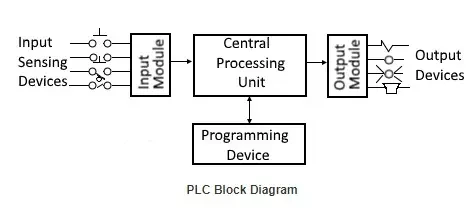
At its core, an automation system follows a simple loop: sense, decide, act. Sensors capture physical data, controllers evaluate that data against programmed logic, and actuators execute the resulting commands. The sophistication lies in how reliably and precisely that loop runs at scale.
The Core Components of an Automation System
Sensors and Input Devices
Sensors are the eyes and ears of the system. They convert physical variables—temperature, pressure, position, flow, proximity—into electrical signals. Common examples include proximity switches, photoelectric sensors, encoders, thermocouples, and flow meters. Sensor selection directly affects system accuracy, so engineers prioritize resolution, response time, and environmental rating.
Controllers: PLC, PAC, and DCS
The controller is the decision-making brain. Three categories dominate:
- Programmable Logic Controllers (PLCs): Rugged, real-time devices ideal for discrete control—starting motors, sequencing machines, and interlocking safety logic.
- Programmable Automation Controllers (PACs): Hybrid platforms combining PLC reliability with advanced computing, motion control, and communication capabilities.
- Distributed Control Systems (DCS): Architectures built for continuous process industries such as chemicals and power generation, where hundreds of loops must be coordinated across a plant.
Actuators and Output Devices
Actuators translate controller commands into physical action. This includes motors, servo drives, pneumatic and hydraulic cylinders, valves, and relays. The choice between electric, pneumatic, and hydraulic actuation depends on force requirements, speed, precision, and operating environment.
Human-Machine Interfaces (HMIs) and Networks
HMIs provide operators with visibility and control—displaying status, alarms, and trends. Beneath them, industrial networks such as EtherNet/IP, PROFINET, and Modbus connect devices into a cohesive system. Reliable communication is as critical as reliable hardware.
Levels of Automation: From Manual to Fully Autonomous
Automation is not binary. Most facilities operate across a spectrum:
Key Automation Architectures at a Glance
| PLC-based | Discrete manufacturing, machine control | Automotive, packaging, electronics | Speed, reliability, ease of maintenance |
| PAC-based | Mixed discrete and motion applications | Robotics, assembly, test systems | Flexibility and advanced processing |
| DCS | Continuous and batch processes | Oil and gas, chemicals, power | Plant-wide coordination and loop control |
| SCADA | Remote monitoring and supervision | Utilities, water, pipelines | Wide-area visibility and control |
The Business Case: Why Automate?
Automation investments are justified across several dimensions. Productivity and throughput improve because machines run at consistent cycle times without fatigue. Quality improves through repeatability and reduced human error. Safety improves by removing operators from hazardous environments and enforcing interlocks. Traceability improves because every action can be logged and analyzed.
However, automation is not automatically profitable. Systems must match production volumes, product variety, and workforce capabilities. High-mix, low-volume operations often benefit from flexible automation, while high-volume lines justify dedicated, hard-tooled systems.
Challenges Beginners Should Anticipate
- Upfront capital cost: Hardware, integration, and commissioning can be substantial.
- Skills gap: Trained engineers and technicians are in short supply and require ongoing development.
- Integration complexity: Legacy equipment rarely communicates easily with modern platforms.
- Cybersecurity: Connected OT networks expand the attack surface and demand strict segmentation and monitoring.
- Change management: Operators and maintenance teams need training and buy-in to realize system benefits.
Getting Started: A Practical Roadmap
Looking Ahead
Industrial automation is evolving toward greater intelligence. Edge computing, industrial IoT, digital twins, and AI-driven optimization are moving from pilots to production deployments. For beginners, the fundamentals remain unchanged: understand the sense-decide-act loop, select components that fit the application, and treat integration and people as first-class priorities. Organizations that master these basics position themselves to adopt advanced technologies with confidence rather than disruption.
Automation is a long-term capability, not a one-time purchase. Approached deliberately, it transforms cost structures, safety records, and competitive standing—one well-designed system at a time.