

Manufacturing is undergoing its most significant transformation since the assembly line. Smart factories—facilities where machines, systems, and people are interconnected through data—are redefining what efficiency, quality, and agility mean on the production floor. At the heart of this revolution is automation technology, the engine that turns raw data into decisive action. This article explores how leading manufacturers deploy automation across their operations, and why the smart factory is no longer a futuristic concept but a competitive necessity.
The Foundation: What Makes a Factory “Smart”?
A smart factory is not defined by a single technology but by the integration of several. Sensors gather real-time data from equipment. Edge computing processes that data on-site. Cloud platforms aggregate and analyze it at scale. And automation systems—robotic, software-based, or both—act on the insights generated. The result is a closed feedback loop in which the factory continuously monitors, learns, and adjusts.
This convergence is often described as Industry 4.0. Its core promise is straightforward: machines that can sense, communicate, and act with minimal human intervention, freeing workers to focus on higher-value tasks such as design, maintenance strategy, and exception handling.
Key Automation Technologies Powering Smart Factories
Industrial Robotics and Cobots
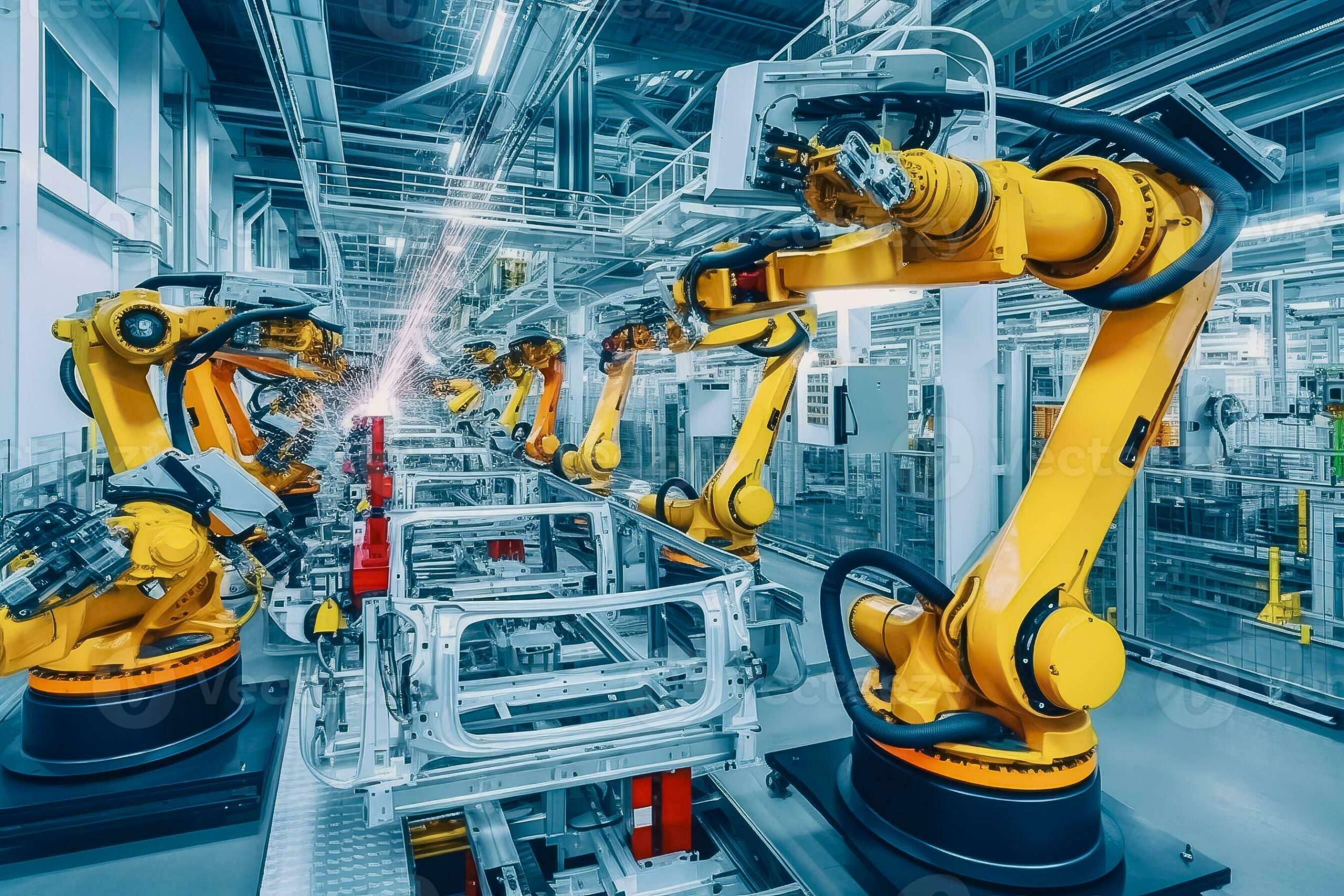
Robotics remains the most visible form of factory automation. Traditional industrial robots excel at high-volume, repetitive tasks—welding, painting, palletizing—with unmatched speed and precision. Increasingly, however, smart factories deploy collaborative robots (cobots) designed to work safely alongside humans. Equipped with force sensors and vision systems, cobots handle tasks such as assembly, quality inspection, and machine tending, adapting to variations that would halt conventional robots.
Industrial Internet of Things (IIoT)
IIoT devices form the nervous system of the smart factory. Vibration sensors on motors, temperature probes in furnaces, and flow meters on coolant lines stream continuous data to monitoring platforms. When thresholds are breached, automation systems can trigger alerts, adjust parameters, or schedule maintenance—often before a failure occurs. This predictive capability dramatically reduces unplanned downtime, one of manufacturing’s most costly problems.
Artificial Intelligence and Machine Learning
AI transforms raw sensor data into prescriptive action. Machine learning models detect subtle patterns invisible to human operators—a slight drift in tolerance, an anomalous energy spike—and recommend or execute corrective measures. In quality control, computer vision systems inspect thousands of parts per hour with accuracy that exceeds manual inspection, flagging defects in real time and feeding results back into production parameters.
Automated Guided Vehicles and Autonomous Mobile Robots
Material movement is a prime automation target. AGVs and AMRs transport raw materials, components, and finished goods across the floor without fixed tracks. Modern AMRs navigate dynamically using LiDAR and mapping software, rerouting around obstacles and optimizing paths. The payoff: leaner inventory buffers, faster changeovers, and reduced reliance on manual labor for non-value-adding transport.
Digital Twins and Simulation
A digital twin is a virtual replica of a physical asset, line, or entire facility, fed by live data. Engineers use twins to simulate changes—a new product mix, an added workstation—before committing capital. Automation platforms can then execute the validated plan, adjusting schedules and machine settings automatically. This capability compresses commissioning time and reduces the risk of costly production errors.
Automation in Action: Core Factory Functions
Smart factories apply automation across the value chain. The table below summarizes representative use cases.
| Production and assembly | Robotic arms, cobots, PLC-controlled lines | Consistent throughput and quality |
| Quality inspection | AI-powered computer vision | Real-time defect detection |
| Maintenance | IIoT sensors with predictive analytics | Reduced unplanned downtime |
| Material handling | AMRs and automated storage systems | Leaner inventory and faster flow |
| Production planning | AI scheduling and digital twins | Optimized resource allocation |
| Energy management | Smart meters and automated load balancing | Lower operating costs |
The Benefits: Why Manufacturers Are Investing
The business case for smart factory automation rests on measurable outcomes:
- Higher productivity: Automated lines run continuously with predictable cycle times, and AI-driven scheduling minimizes idle capacity.
- Superior quality: Machine vision and closed-loop control catch defects earlier, reducing scrap and warranty claims.
- Greater agility: Software-defined automation allows rapid retooling for new products, supporting high-mix, low-volume production.
- Improved safety: Robots take on hazardous tasks, while sensor networks monitor environmental and equipment risks.
- Sustainability: Optimized energy and material usage lowers waste and carbon footprint.
Challenges and Best Practices
Automation is not plug-and-play. Successful adopters address several hurdles:
The Road Ahead
The smart factory is evolving toward greater autonomy. Lights-out manufacturing—production with minimal human presence—is already viable in select high-volume environments. Generative AI is beginning to assist with process design and troubleshooting. And 5G connectivity is enabling ultra-low-latency control of mobile robots and remote operations.
For manufacturers, the message is clear: automation technology is no longer a differentiator reserved for giants. It is the operating standard of the modern factory floor. Those who integrate robotics, IIoT, and AI into a coherent, data-driven system will define the next decade of industrial competitiveness—and those who wait risk being defined by it.