
Sensors are the unsung heroes of modern automated manufacturing. While robotic arms, conveyor systems, and CNC machines capture the imagination, it is the vast network of sensors beneath them that makes true automation possible. These devices convert physical phenomena—temperature, pressure, position, proximity, and more—into electrical signals that control systems can interpret and act upon. Without sensors, automated manufacturing would be blind, deaf, and incapable of the precision and reliability that modern industry demands.
In this article, we examine the critical role sensors play in automated manufacturing, the primary sensor categories deployed on the factory floor, and the emerging trends shaping the next generation of smart production environments.
Why Sensors Are the Backbone of Automation
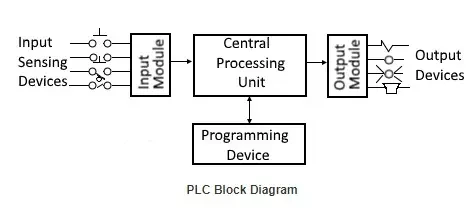
Automation is fundamentally a closed-loop process: a system must perceive its environment, make decisions based on that perception, and execute actions accordingly. Sensors close the perception gap. They provide the real-time data that programmable logic controllers (PLCs), industrial PCs, and edge devices rely on to maintain quality, ensure safety, and optimize throughput.
The value of sensors extends beyond simple detection. Modern manufacturing lines generate enormous volumes of sensor data, which feed analytics platforms and machine learning models. This data enables predictive maintenance, reduces unplanned downtime, and supports continuous process improvement—outcomes that directly affect the bottom line.
Key Sensor Categories in Automated Manufacturing
1. Position and Proximity Sensors
Position sensors verify that components, tools, and workpieces are exactly where they should be. Inductive, capacitive, and photoelectric proximity sensors detect the presence or absence of objects without physical contact, making them ideal for high-cycle production environments. Linear encoders and rotary encoders provide precise positional feedback for servo motors and robotic axes.
2. Vision and Optical Sensors
Machine vision systems have transformed quality assurance. High-resolution cameras combined with image-processing algorithms inspect parts for defects, verify assembly completeness, read barcodes and Data Matrix codes, and guide robots in pick-and-place operations. Vision sensors deliver speed and repeatability that human inspectors cannot match at scale.
3. Force and Torque Sensors
Force-torque sensors give robots a sense of touch. In assembly tasks, they enable delicate operations such as inserting connectors, tightening fasteners to specification, and detecting jams or collisions. Collaborative robots rely heavily on these sensors to operate safely alongside human workers.
4. Temperature, Pressure, and Flow Sensors
Process manufacturing—and many discrete operations—depends on tight control of physical variables. Temperature sensors safeguard welding and molding processes, pressure sensors monitor pneumatic and hydraulic systems, and flow sensors ensure correct coolant or lubricant delivery. Deviations trigger alarms or automatic corrections before defects occur.
5. Safety Sensors
Safety is non-negotiable in automated facilities. Light curtains, safety laser scanners, and interlock switches detect human presence in hazardous zones and trigger immediate machine stoppage. These sensors satisfy rigorous standards such as ISO 13849 and enable productive collaboration between people and machines.
Sensor Types and Their Primary Applications
| Inductive Proximity | Detects metallic objects without contact | Part presence on conveyors |
| Photoelectric | Detects objects via light beam interruption | Counting and sorting |
| Vision Camera | Captures images for inspection | Defect detection, code reading |
| Force-Torque | Measures applied force and torque | Precision assembly, polishing |
| Encoder | Provides positional and speed feedback | Servo motor control |
| Safety Laser Scanner | Detects human presence in zones | Robot cell safeguarding |
Integration with Industry 4.0 and IIoT
Sensors are the foundation of the Industrial Internet of Things (IIoT). Smart sensors with embedded microprocessors and network connectivity transmit data directly to cloud platforms and manufacturing execution systems (MES). This connectivity enables:
- Predictive maintenance: Vibration and temperature sensors identify wear patterns before failures occur.
- Real-time monitoring: Dashboards track line performance and flag anomalies instantly.
- Digital twins: Sensor data feeds virtual replicas of production systems for simulation and optimization.
- Traceability: Sensors log every process parameter, supporting regulatory compliance and root-cause analysis.
Selection Criteria for Manufacturing Sensors
Choosing the right sensor requires careful evaluation. Engineers should consider several factors:
Challenges and Best Practices
Deploying sensors at scale is not without challenges. Sensor drift, electromagnetic interference, and mounting errors can compromise data quality. Best practices include regular calibration, shielding against interference, redundant sensing for critical functions, and centralized sensor health monitoring. As facilities grow more complex, sensor management platforms become essential to maintaining reliability.
The Road Ahead
The future of automated manufacturing is increasingly sensor-driven. Advances in miniaturization, wireless sensing, and edge computing are pushing intelligence closer to the production line. Self-diagnosing sensors, energy-harvesting designs, and AI-enhanced signal processing promise even greater autonomy and efficiency.
For manufacturers, the message is clear: sensors are not peripheral components—they are strategic assets. Investing in the right sensing architecture today lays the groundwork for the smart factories of tomorrow.