
Industrial machinery and equipment form the backbone of modern manufacturing. As global competition intensifies and supply chains grow more complex, equipment manufacturers and plant operators are under pressure to deliver more with less. The result is a wave of innovation that is reshaping how machines are designed, operated, and maintained. From autonomous systems to sustainable power sources, the following trends are defining the next generation of industrial equipment.
1. Industry 4.0 and the Connected Machine
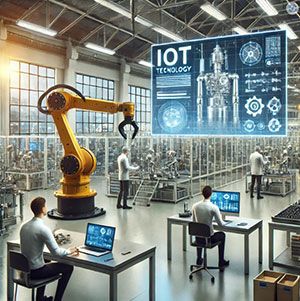
The factory floor is no longer a collection of isolated assets. Industrial equipment is increasingly built with embedded sensors, edge computing capabilities, and native connectivity. This shift toward Industry 4.0 allows machines to communicate status, performance, and maintenance needs in real time.
Key developments in this area include:
- Predictive maintenance: Sensor data and machine learning models identify wear patterns before failures occur, reducing unplanned downtime.
- Digital twins: Virtual replicas of physical equipment allow engineers to simulate performance and test changes without disrupting production.
- Edge analytics: Processing data at the machine level lowers latency and reduces dependence on cloud infrastructure.
For equipment buyers, connectivity is no longer a nice-to-have feature. It is becoming a baseline expectation, and manufacturers that fail to deliver it risk falling behind competitors.
2. Automation and Autonomous Operations
Automation has been a manufacturing staple for decades, but the scope and sophistication of today’s systems represent a significant leap forward. Autonomous mobile robots, collaborative robots, and self-adjusting production lines are moving from pilot projects into mainstream deployment.
Modern automation systems offer several advantages:
The emphasis is shifting from simple mechanization to intelligent autonomy — systems that can perceive their environment, make decisions, and improve over time.
3. Electrification and Sustainable Power
Environmental regulation and corporate sustainability targets are driving a fundamental shift in how industrial equipment is powered. Diesel and hydraulic systems are giving way to electric and hybrid alternatives across a range of equipment categories.
Notable trends include:
- Electric drives and motors: Higher efficiency and lower emissions compared with traditional combustion systems.
- Battery technology: Advances in energy density and fast charging are making battery-powered heavy equipment viable.
- Energy recovery systems: Regenerative braking and waste-heat recovery reduce overall energy consumption.
Sustainability is also influencing equipment design itself, with manufacturers prioritizing recyclable materials, reduced lubricant use, and lower noise output.
4. Additive Manufacturing in Equipment Production
3D printing is no longer confined to prototyping. Industrial equipment manufacturers are using additive manufacturing to produce end-use components, spare parts, and tooling. This approach shortens lead times, enables complex geometries that traditional machining cannot achieve, and supports on-demand parts production at or near the point of use.
For plant operators, additive manufacturing offers a practical path to reducing spare-parts inventory while improving uptime.
5. Human-Machine Collaboration and Workforce Enablement
As equipment grows more sophisticated, the interface between operator and machine is evolving. Augmented reality overlays, intuitive touchscreen controls, and voice-assisted diagnostics are lowering the skill barrier for complex tasks.
The goal is not to replace workers but to augment their capabilities. Equipment that is easier to operate, troubleshoot, and maintain helps manufacturers address persistent labor shortages while improving safety and productivity.
Summary of Key Trends
| Industry 4.0 connectivity | Real-time visibility and predictive maintenance | Mainstream |
| Autonomous operations | Flexibility, safety, and consistency | Growing |
| Electrification | Lower emissions and operating costs | Accelerating |
| Additive manufacturing | Faster parts production and reduced inventory | Emerging |
| Human-machine collaboration | Workforce enablement and safety | Growing |
Conclusion
The industrial machinery sector is undergoing a period of rapid transformation. Connectivity, autonomy, electrification, and additive manufacturing are converging to create equipment that is smarter, cleaner, and more adaptable than ever before. For manufacturers and plant operators, staying competitive will depend on understanding these trends and investing in equipment that is built for the connected, sustainable factory of the future. The companies that act early will be best positioned to capture the productivity gains and operational resilience these technologies promise.