

The debate between industrial robotics and manual labor has moved from the conference room to the factory floor. For operations leaders, plant managers, and manufacturing executives, the question is no longer whether automation belongs in production—it is where, when, and how it should complement human work. Understanding the key differences between these two approaches is essential for making informed capital investment decisions and building a resilient, competitive operation.
This article breaks down the critical distinctions across cost, productivity, flexibility, quality, safety, and workforce impact so you can evaluate each option against your specific operational realities.
Defining the Two Approaches
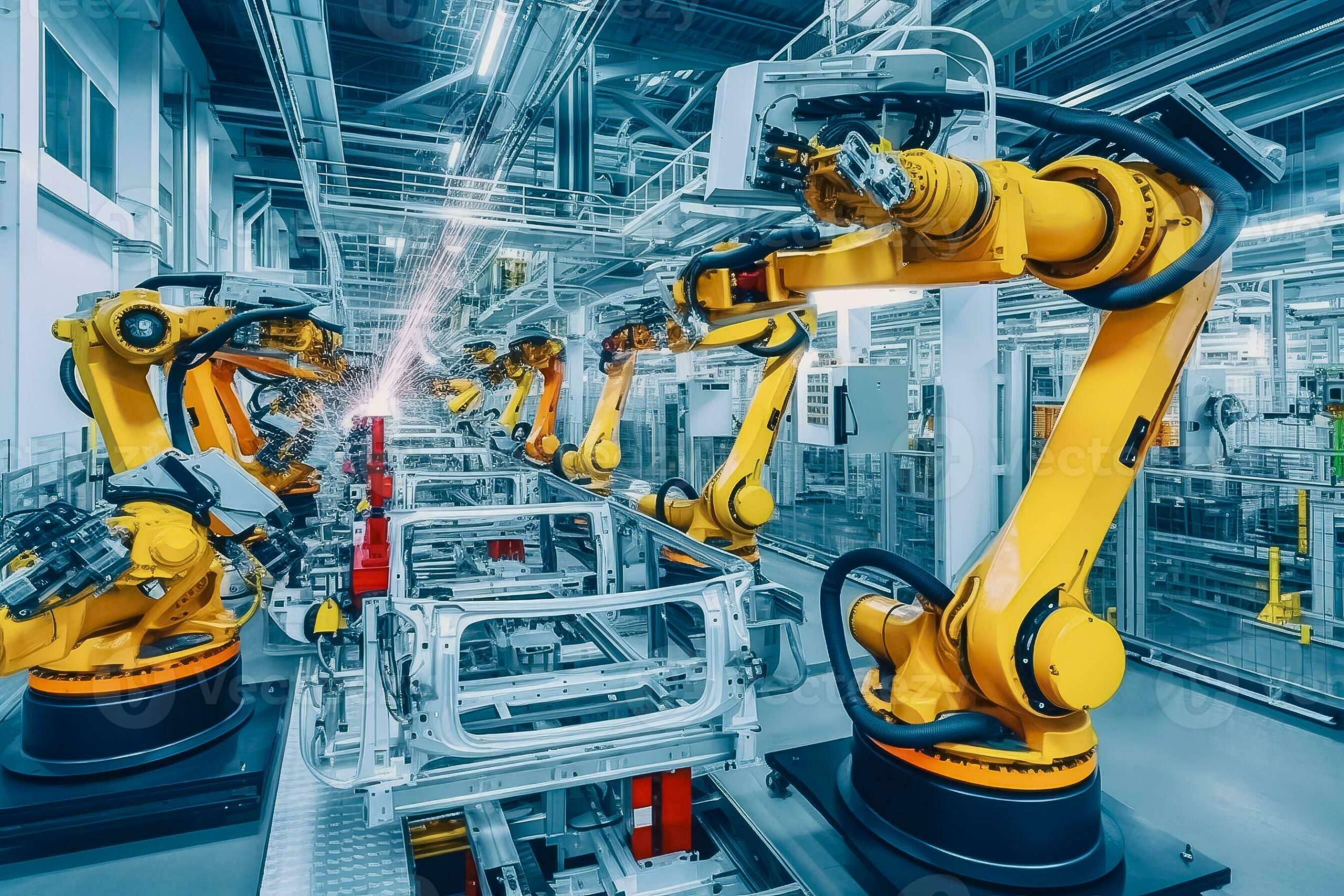
Industrial robotics refers to programmable, automated machines—such as articulated arms, collaborative robots (cobots), automated guided vehicles, and specialized welding or painting systems—designed to perform repetitive or hazardous tasks with high precision. Manual labor, by contrast, relies on human operators to perform assembly, inspection, material handling, and other production tasks using hand tools, power tools, and manual judgment.
Neither approach is universally superior. The right choice depends on production volume, task complexity, product variability, and the total cost of ownership over time.
Cost Structure and Total Cost of Ownership
The most visible difference is the cost profile. Robotics requires significant upfront capital expenditure, while manual labor carries ongoing operational costs. However, the full picture is more nuanced than the sticker price.
| Upfront investment | High (equipment, integration, programming) | Low to moderate (recruitment, training) |
| Recurring costs | Maintenance, software licenses, energy | Wages, benefits, overtime, turnover |
| Scalability cost | High per additional unit | Linear with headcount |
| Cost per unit (high volume) | Decreases significantly | Remains relatively stable |
| Cost per unit (low volume) | High due to underutilization | Competitive and flexible |
Robotic systems typically achieve payback within two to five years in high-volume, low-mix environments. In low-volume, high-mix production, manual labor often remains more economical because robots cannot be redeployed quickly enough to justify the investment.
Productivity, Speed, and Consistency
Robots excel at repeatability and throughput. They operate at consistent cycle times, run multiple shifts without fatigue, and maintain tolerances that human hands cannot match over an eight-hour shift. For tasks such as pick-and-place, welding, palletizing, and precision assembly, robotic systems deliver measurable gains in output per hour.
Manual labor, however, offers adaptability. Human operators can handle variation, troubleshoot anomalies, and switch between tasks with minimal setup. Where a robot may require reprogramming and re-fixturing, a skilled worker can adjust in minutes.
- Robotics strength: High-volume repetition with near-zero variance
- Manual strength: Low-volume versatility and rapid changeover
- Robotics limitation: Poor performance on non-standard or unpredictable tasks
- Manual limitation: Fatigue, inconsistency, and throughput ceilings
Quality and Defect Rates
Consistency is where robotics demonstrates a decisive advantage. Automated systems perform identical motions thousands of times with minimal deviation, reducing scrap rates and rework in processes where precision is critical. In industries such as electronics, automotive, and medical devices, this consistency directly translates into lower cost of poor quality.
Manual labor introduces variability through human factors—attention, fatigue, and technique differences between operators. That said, experienced workers bring judgment and sensory perception that robots still struggle to replicate, particularly in cosmetic inspection, complex fitting, and tasks requiring tactile feedback.
Safety and Working Conditions
Safety is a dual-edged consideration. Robots can remove workers from hazardous environments—high-temperature welding, heavy material handling, chemical exposure—reducing injury risk. Modern cobots with force-limiting sensors can also work safely alongside humans without full guarding.
However, robotics introduces new safety requirements: risk assessments, safeguarding, lockout/tagout procedures, and specialized training. Manual labor carries well-documented ergonomic and repetitive-strain risks, but it also benefits from human situational awareness that machines lack.
Flexibility and Scalability
Manual labor scales linearly: add workers, add capacity. It also adapts instantly to design changes, custom orders, and seasonal demand swings. Robotics scales in steps—each cell represents a fixed capacity increment—and requires engineering effort to reconfigure.
For manufacturers with stable, high-volume product lines, robotic scalability is a strength. For job shops and make-to-order operations, the fixed nature of automation can become a liability.
Workforce Impact and the Hybrid Future
The most effective operations rarely choose one approach exclusively. Hybrid models—where robots handle repetitive, dangerous, or precision-intensive tasks while skilled workers manage exceptions, quality oversight, and changeovers—consistently outperform pure strategies.
This shift changes workforce requirements rather than eliminating them. Demand grows for technicians who can program, maintain, and supervise automated systems. Companies that invest in reskilling their existing workforce capture the productivity benefits of robotics while preserving institutional knowledge.
Making the Decision
Choose industrial robotics when tasks are repetitive, volumes are high, precision tolerances are tight, and safety risks are significant. Choose manual labor when production is variable, volumes are low, tasks require judgment, or rapid changeover is essential.
In most modern facilities, the answer is not either-or. The competitive advantage lies in strategically deploying automation where it delivers measurable ROI and empowering human workers where adaptability and expertise create irreplaceable value.