
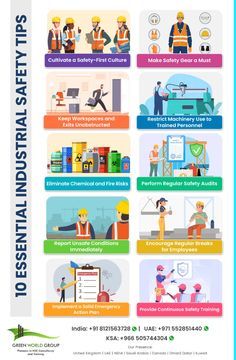
In the manufacturing sector, safety is not a compliance checkbox—it is a core operational discipline. Facilities that prioritize industrial safety protect their workforce, reduce costly downtime, and maintain the regulatory standing required to operate competitively. Whether you manage a small fabrication shop or a large-scale production plant, a structured approach to safety yields measurable returns. This article outlines the essential industrial safety practices every manufacturing facility should implement and sustain.
1. Establish a Comprehensive Safety Management System
A safety management system (SMS) provides the framework for identifying hazards, assigning responsibilities, and measuring performance. Rather than reacting to incidents after they occur, an effective SMS creates a proactive culture of risk awareness.
- Written safety policies: Document clear expectations for behavior, reporting, and accountability at every organizational level.
- Defined roles: Assign safety officers, department champions, and executive sponsors with explicit responsibilities.
- Regular audits: Schedule internal and third-party inspections to verify that controls remain effective.
- Performance metrics: Track leading indicators such as near-miss reports and training completion rates, not only lagging indicators like injury counts.
2. Conduct Thorough Hazard Assessments
Hazard identification is the foundation of every effective safety program. Facilities should perform job hazard analyses (JHAs) for each task and conduct periodic risk assessments across the entire production floor.
Facilities that review hazard assessments annually—and after every change—consistently report fewer recordable incidents.
3. Enforce Machine Guarding and Lockout/Tagout Procedures
Moving machinery remains one of the most significant sources of serious injury in manufacturing. Machine guarding must be engineered into equipment and inspected regularly for damage or removal.
Lockout/tagout (LOTO) procedures protect workers during maintenance and servicing. Every facility should maintain written energy-control procedures for each machine, train authorized employees, and provide personal locks and tags. Audits of LOTO practices should occur at least annually to confirm compliance.
4. Prioritize Personal Protective Equipment (PPE)
PPE is the last line of defense, but it is indispensable. Employers must provide appropriate equipment at no cost, train workers on proper use, and enforce consistent wear.
| Machining and cutting | Safety glasses, face shields, cut-resistant gloves | Daily |
| Chemical handling | Chemical-resistant gloves, goggles, aprons, respirators | Before each use |
| Noise zones | Hearing protection (earplugs or muffs) | Daily |
| Welding operations | Welding helmets, flame-resistant clothing, respirators | Before each use |
| Material handling | Steel-toe boots, high-visibility vests, back supports | Daily |
5. Maintain Emergency Preparedness and Response Plans
Manufacturing facilities face a range of emergencies—fires, chemical spills, power failures, and medical events. A tested emergency response plan saves lives and limits property damage.
- Evacuation routes: Post clear, illuminated maps and keep aisles unobstructed.
- Drills: Conduct documented evacuation and shelter-in-place drills at least twice annually.
- Emergency equipment: Inspect fire extinguishers, eyewash stations, and first-aid kits monthly.
- Communication: Maintain a reliable alert system and a current emergency contact roster.
6. Invest in Continuous Safety Training
Safety training must be ongoing, not a one-time onboarding event. Workers need updated knowledge as equipment, materials, and processes evolve.
Effective training programs combine classroom instruction with hands-on demonstration and competency verification. Topics should cover hazard communication, LOTO, forklift operation, confined space entry, and emergency procedures. Refresher training should occur annually or whenever an incident reveals a knowledge gap.
Building a Safety-First Culture
Procedures alone cannot guarantee safety; culture sustains them. Encourage near-miss reporting without fear of reprisal, recognize employees who identify hazards, and ensure leadership visibly participates in safety walkthroughs. When workers believe leadership genuinely prioritizes their well-being, compliance rises and incidents decline.
7. Use Technology to Strengthen Safety Monitoring
Modern facilities increasingly leverage digital tools to enhance safety oversight. Sensor-based monitoring can detect gas leaks or excessive noise. Digital inspection platforms streamline audit documentation. Wearable devices can alert supervisors to fatigue or proximity hazards. Investing in these technologies demonstrates a forward-looking commitment to worker protection.
Conclusion
Industrial safety is a continuous journey of assessment, training, and improvement. By establishing a robust safety management system, conducting rigorous hazard assessments, enforcing machine guarding and LOTO protocols, equipping workers properly, preparing for emergencies, and fostering a culture of accountability, manufacturing facilities can dramatically reduce risk. Safety is not a cost center—it is a competitive advantage that protects people, productivity, and profitability.