
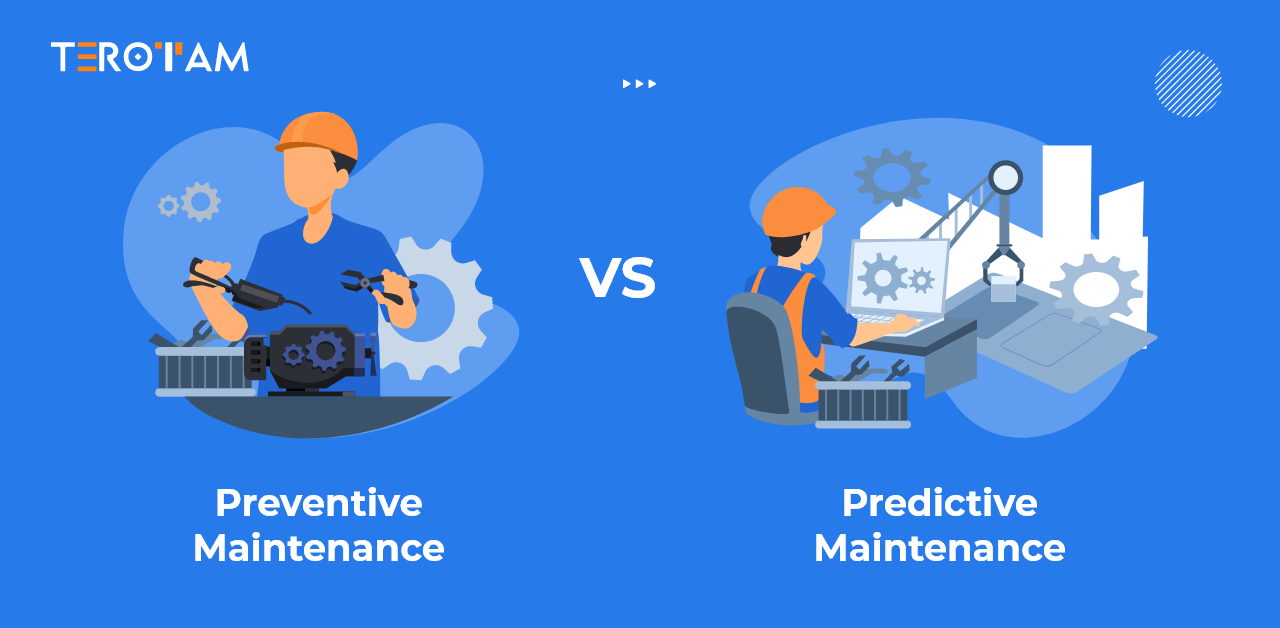
In the industrial and technology sectors, equipment downtime is more than an inconvenience—it is a direct threat to revenue, safety, and reputation. Maintenance strategies have evolved significantly over the past decade, and two approaches dominate the conversation: preventive maintenance and predictive maintenance. While the two terms are sometimes used interchangeably, they represent fundamentally different philosophies, workflows, and levels of technological sophistication. Understanding the distinction is essential for asset managers, operations leaders, and decision-makers who want to optimize costs without compromising reliability.
This article breaks down the key differences between preventive and predictive maintenance, examines the strengths and limitations of each, and offers guidance on how to choose the right strategy for your organization.
What Is Preventive Maintenance?
Preventive maintenance (PM) is a time-based or usage-based strategy. Equipment is serviced on a fixed schedule—for example, every 500 operating hours or every quarter—regardless of its actual condition. The goal is to replace worn components and perform inspections before failure occurs, reducing the likelihood of unplanned breakdowns.
Common examples include:
- Changing lubricants and filters at set intervals
- Replacing belts, bearings, and seals on a calendar schedule
- Performing routine inspections and calibration
- Scheduled shutdowns for component overhauls
Preventive maintenance is straightforward to plan and requires minimal instrumentation. However, it carries an inherent inefficiency: components in good condition are often replaced prematurely, and failures that occur between service intervals are not caught.
What Is Predictive Maintenance?
Predictive maintenance (PdM) is a condition-based strategy powered by data. Instead of following a fixed calendar, PdM uses sensors, historical data, and analytics—increasingly including machine learning—to monitor the real-time health of assets and forecast when a failure is likely to occur. Maintenance is then scheduled precisely when it is needed.
Typical PdM technologies and techniques include:
- Vibration analysis and thermography
- Oil and fluid condition monitoring
- Acoustic and ultrasonic sensing
- IoT-connected sensors feeding cloud analytics platforms
- AI models that detect anomalies and estimate remaining useful life (RUL)
Predictive maintenance minimizes unnecessary interventions and catches degradation early, but it requires investment in sensors, connectivity, data infrastructure, and specialized expertise.
Key Differences at a Glance
The table below summarizes the most important distinctions between the two approaches.
| Trigger | Time or usage intervals | Real-time condition data |
| Data Requirements | Low—schedules and logs | High—sensor data and analytics |
| Upfront Investment | Relatively low | Significant (sensors, platforms, training) |
| Maintenance Timing | Fixed, planned in advance | Dynamic, based on asset health |
| Risk of Over-Maintenance | High | Low |
| Detection of Random Failures | Limited | Stronger through continuous monitoring |
| Complexity | Low to moderate | High |
| Best Suited For | Stable, low-cost, non-critical assets | Critical, expensive, or failure-prone assets |
Cost and ROI Considerations
Preventive maintenance is often the entry point for organizations building a formal maintenance program. Its costs are predictable, and it demands little in the way of digital infrastructure. The trade-off is inefficiency: studies across heavy industry consistently show that a large share of scheduled PM tasks address equipment that does not yet need service.
Predictive maintenance typically carries a higher initial cost, but it can deliver substantial returns for the right assets. By eliminating unnecessary maintenance and reducing unplanned downtime, PdM programs frequently achieve lower total cost of ownership over time. The key caveat is that predictive maintenance is not universally justified—applying it to every asset in a facility usually destroys the business case.
When to Use Each Strategy
Most mature operations do not choose one approach exclusively. Instead, they adopt a hybrid maintenance model that allocates resources according to asset criticality.
This tiered approach ensures that investment follows risk, and that maintenance budgets are deployed where they generate the greatest return.
The Bottom Line
Preventive maintenance asks, “When should we service this asset?” Predictive maintenance asks, “What condition is this asset actually in, and when will it fail?” The first is a schedule; the second is a data-driven forecast. Neither is inherently superior—the right choice depends on asset criticality, failure characteristics, budget, and the maturity of your data infrastructure. Organizations that treat the two as complementary tools, rather than competing ideologies, consistently achieve the strongest balance of reliability, cost efficiency, and operational uptime.