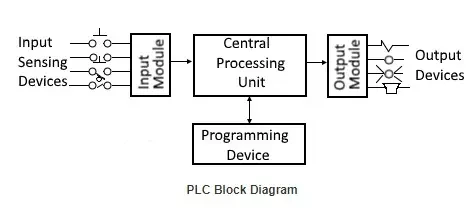

Industrial automation has become the backbone of modern manufacturing. From programmable logic controllers (PLCs) to advanced robotics and Industrial Internet of Things (IIoT) platforms, automation promises greater throughput, consistency, and operational visibility. Yet the path from legacy operations to a fully integrated automated environment is rarely straightforward. Engineering teams consistently encounter a familiar set of obstacles that can stall projects, inflate budgets, and erode stakeholder confidence. Understanding these challenges—and the proven strategies for overcoming them—is essential for any organization committed to a successful automation journey.
Challenge 1: Integration with Legacy Systems
Few facilities begin with a clean slate. Most plants operate a patchwork of equipment spanning multiple decades, vendors, and communication protocols. Connecting this legacy hardware to modern control platforms often requires custom middleware, protocol translation, and significant engineering hours. The result is a brittle integration layer that becomes a single point of failure.
Solutions
- Adopt protocol-agnostic gateways: Edge gateways that support Modbus, PROFIBUS, EtherNet/IP, and OPC UA can bridge disparate systems without rip-and-replace costs.
- Standardize on OPC UA: As a vendor-neutral standard, OPC UA provides a secure, scalable foundation for data exchange across mixed environments.
- Phase modernization deliberately: Prioritize high-value assets for upgrade while isolating legacy systems behind well-documented interfaces.
Challenge 2: Cybersecurity Vulnerabilities
Connecting operational technology (OT) to enterprise IT networks dramatically expands the attack surface. Legacy controllers were rarely designed with security in mind, and flat network architectures allow threats to propagate rapidly from a single compromised endpoint. Ransomware targeting industrial environments is no longer hypothetical—it is a board-level risk.
Solutions
- Implement network segmentation: Apply the Purdue Model and enforce strict zones and conduits between IT and OT layers.
- Deploy OT-aware monitoring: Passive intrusion detection systems that understand industrial protocols can flag anomalies without disrupting production.
- Enforce patch and credential hygiene: Establish a controlled patch management process and eliminate shared or default credentials across all devices.
Challenge 3: Skills Gaps and Workforce Transition
Automation demands a workforce fluent in controls engineering, data analytics, and network architecture—a combination that is increasingly difficult to recruit and retain. Meanwhile, experienced technicians with deep tribal knowledge of legacy equipment are retiring, taking undocumented process insights with them.
Solutions
- Invest in structured upskilling: Partner with vendors and technical colleges to deliver hands-on training in PLC programming, robotics, and industrial networking.
- Capture institutional knowledge: Document control logic, maintenance procedures, and process rationale before subject-matter experts exit the organization.
- Leverage managed services strategically: Outsourcing specialized functions such as OT security monitoring or predictive maintenance analytics frees internal teams to focus on core operations.
Challenge 4: Data Silos and Limited Analytics
Automation generates enormous volumes of data, yet much of it remains trapped in proprietary historians or isolated machine controllers. Without a unified data architecture, organizations struggle to move from reactive maintenance to predictive strategies or to derive meaningful production insights.
Solutions
- Establish a unified namespace: A consistent data model across assets enables aggregation and contextualization of operational data.
- Use edge computing for preprocessing: Filter and normalize data at the source to reduce bandwidth costs and latency before transmitting to cloud or on-premise platforms.
- Start with targeted use cases: Pilot predictive maintenance or OEE dashboards on a single line before scaling enterprise-wide.
Challenge 5: Downtime Risks During Deployment
Automation projects frequently collide with production schedules. Commissioning new systems while maintaining output creates pressure to cut corners, and unplanned downtime during cutover can cost tens of thousands of dollars per hour.
Solutions
- Simulate before you deploy: Digital twin modeling and offline PLC testing validate logic and sequences before touching live equipment.
- Plan cutovers during low-demand windows: Coordinate deployments with maintenance shutdowns and seasonal lulls.
- Maintain rollback readiness: Document and test reversion procedures so that any failed cutover can be reversed quickly.
Challenge 6: Scalability and Vendor Lock-In
Proprietary ecosystems can deliver excellent performance within a single vendor’s stack, but they often make expansion expensive and migration painful. Organizations that commit too deeply to closed platforms find themselves constrained when business requirements evolve.
Solutions
- Favor open standards: Specify equipment and platforms that support open protocols and documented APIs.
- Design modular architectures: Component-based system design allows incremental expansion without wholesale replacement.
- Negotiate data ownership terms: Ensure contracts explicitly grant access to operational data in usable formats.
Challenge 7: Change Management and Adoption Resistance
Technology is often the easy part. Resistance from operators, maintenance staff, and supervisors who fear displacement or distrust unfamiliar systems can undermine even well-engineered deployments.
Solutions
- Involve end users early: Include operators in design reviews and pilot feedback loops to build ownership.
- Communicate the “why”: Frame automation as augmentation—reducing repetitive tasks and improving safety—rather than replacement.
- Celebrate quick wins: Publicize early successes to build momentum and demonstrate tangible benefits.
Summary of Challenges and Solutions
| Legacy integration | Protocol-agnostic gateways and OPC UA | Phased modernization roadmap |
| Cybersecurity | Network segmentation and OT monitoring | Executive-level security governance |
| Skills gaps | Upskilling and knowledge capture | Structured training investment |
| Data silos | Unified namespace and edge computing | Targeted pilot use cases |
| Downtime risk | Simulation and rollback planning | Disciplined cutover procedures |
| Vendor lock-in | Open standards and modular design | Contractual data ownership |
| Change resistance | Early user involvement | Transparent communication |
Conclusion
Industrial automation delivers transformative value—but only when organizations anticipate the challenges that accompany it. The most successful deployments treat automation as a strategic program rather than a series of equipment purchases. By addressing integration, security, workforce readiness, data architecture, deployment risk, scalability, and change management with deliberate forethought, engineering leaders can convert common obstacles into competitive advantages. The technology is proven; the difference lies in execution, planning, and a clear-eyed understanding of what it takes to bring automation to life on the plant floor.