
Manufacturing has always been defined by its ability to evolve. From the mechanized looms of the first industrial revolution to the assembly lines of the twentieth century, each wave of innovation has reshaped how goods are produced, how quickly they reach the market, and how competitive a factory can be. Today, industrial automation stands as the defining force of that evolution. It is no longer a futuristic concept reserved for flagship facilities; it is the operational backbone of modern production, influencing everything from throughput and quality to energy consumption and workforce dynamics.
For manufacturers, the question is no longer whether to embrace automation, but how strategically to deploy it. Understanding the transformation underway is essential for decision-makers who intend to remain competitive in an increasingly demanding global market.
The Shift From Mechanization to Intelligent Systems
Early automation focused on repetition: fixed machinery executing pre-programmed tasks with limited flexibility. Modern industrial automation is fundamentally different. It combines robotics, sensors, data analytics, and connectivity into integrated systems capable of sensing their environment, adjusting in real time, and communicating across the production floor.
This shift matters because it moves automation from a tool of efficiency to a driver of intelligence. Machines no longer simply perform work; they generate data about that work, enabling continuous optimization. The result is a manufacturing environment that learns, adapts, and improves with every production cycle.
Key Technologies Driving the Transformation
Several interconnected technologies form the foundation of modern industrial automation. Together, they create a production ecosystem that is faster, more precise, and more responsive than traditional methods allow.
- Industrial robotics: Collaborative and autonomous robots now handle tasks ranging from precision assembly to heavy material handling, working safely alongside human operators.
- Industrial Internet of Things (IIoT): Networked sensors collect real-time data on machine performance, environmental conditions, and product quality, feeding analytics platforms that inform decisions.
- Artificial intelligence and machine learning: AI models detect anomalies, predict equipment failures, and optimize process parameters far faster than manual analysis permits.
- Digital twins: Virtual replicas of physical assets allow engineers to simulate changes, test configurations, and troubleshoot issues without disrupting live production.
- Programmable logic controllers and edge computing: Localized processing power enables rapid decision-making at the machine level, reducing latency and dependence on centralized systems.
Each technology delivers value independently, but their combined effect is what defines the transformation. Automation is most powerful when these systems operate as a coordinated whole.
Measurable Gains in Efficiency and Quality
The business case for automation rests on tangible outcomes. Manufacturers that deploy well-designed automation programs consistently report improvements across core performance indicators.
| Production throughput | Higher output through continuous operation and reduced cycle times |
| Product quality | Fewer defects due to consistent, repeatable processes |
| Downtime | Reduced through predictive maintenance and real-time monitoring |
| Energy consumption | Optimized through intelligent load management and process control |
| Workplace safety | Improved by removing workers from hazardous environments |
These gains compound over time. A factory that reduces defects also reduces waste, rework, and warranty costs. A facility that predicts failures avoids unplanned stoppages that cascade through supply chains. Automation does not merely make individual tasks faster; it strengthens the entire operational system.
Reshaping the Workforce
One of the most persistent misconceptions about industrial automation is that it eliminates jobs outright. The reality is more nuanced. Automation typically displaces specific tasks rather than entire roles, and it simultaneously creates demand for new skills.
Modern manufacturing environments require technicians who can program and maintain robotic systems, engineers who can interpret data from connected machines, and operators who can supervise automated processes rather than perform manual labor. The workforce transformation is significant, but it is a shift in capability, not simply a reduction in headcount.
Forward-thinking manufacturers invest in reskilling programs that prepare existing employees for these evolving roles. Organizations that treat automation as a partnership between technology and people consistently achieve better results than those that view the two as competing forces.
Challenges on the Path to Automation
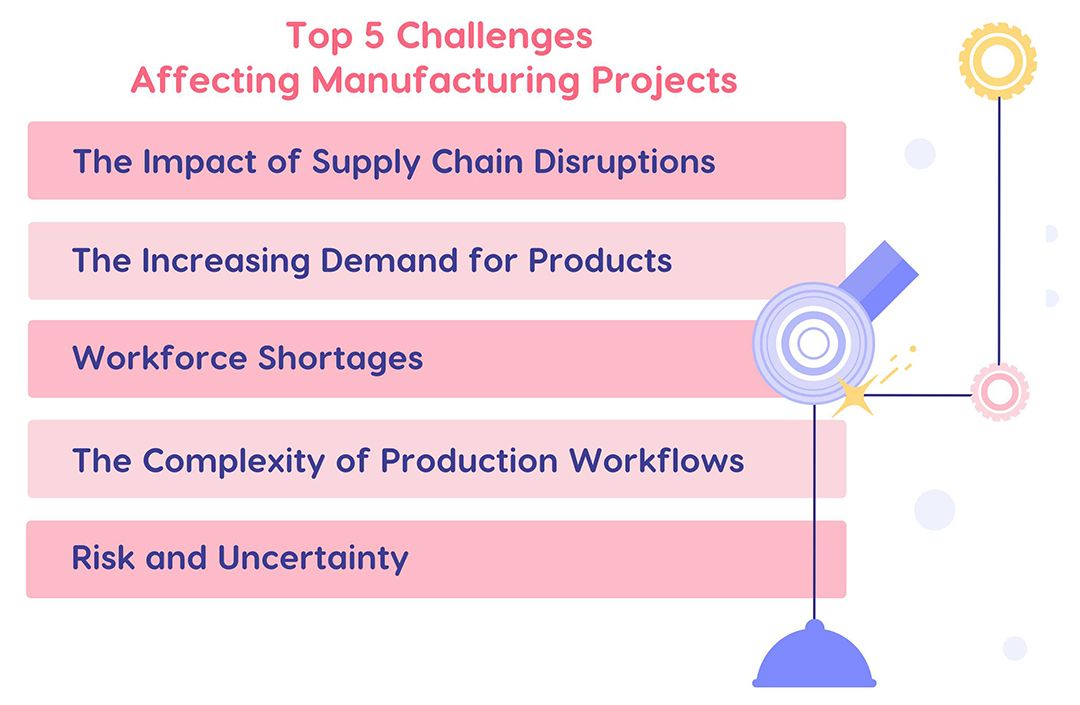
The transformation is not without obstacles. Acknowledging them is essential for realistic planning.
Each challenge is manageable with deliberate planning. Phased rollouts, pilot programs, and strong vendor partnerships reduce risk while demonstrating value early.
The Road Ahead
Industrial automation will continue to advance as AI capabilities mature, connectivity standards solidify, and robotics become more accessible to mid-sized manufacturers. The factories that thrive will be those that treat automation as an ongoing strategic capability rather than a one-time upgrade.
For manufacturing leaders, the imperative is clear. Automation is no longer a competitive advantage reserved for the largest players; it is becoming the baseline expectation for efficient, resilient, and profitable production. Organizations that act decisively today will define the standards of tomorrow’s manufacturing landscape.