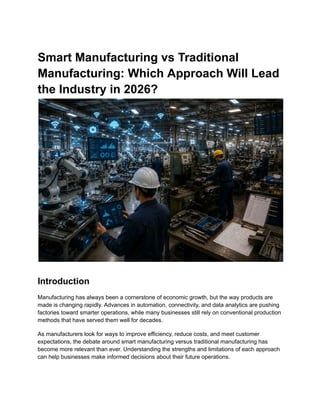

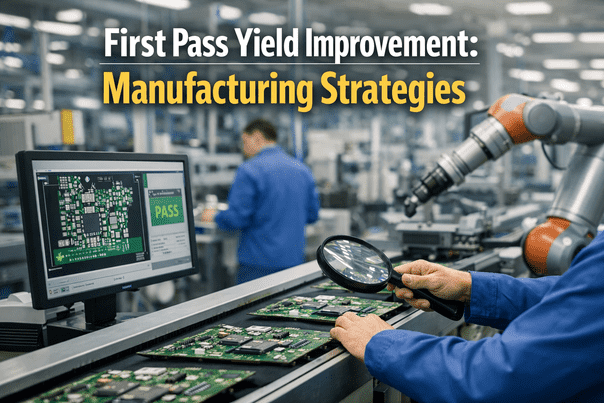
In an era defined by volatile supply chains, rising material costs, and relentless customer demand, manufacturing efficiency has become the single most powerful lever for competitive advantage. Efficiency is no longer merely about cutting costs; it is about building a resilient, data-driven operation that maximizes output per unit of input while maintaining quality and safety. The manufacturers who thrive are those who treat productivity as a continuous discipline rather than a one-time initiative. This article explores proven strategies for improving manufacturing productivity, from lean principles and automation to predictive maintenance and workforce empowerment.
Understanding Manufacturing Efficiency
Manufacturing efficiency measures how effectively a facility converts resources — labor, materials, energy, and machine time — into finished goods. The most widely referenced metric is Overall Equipment Effectiveness (OEE), which combines availability, performance, and quality into a single indicator of productive capacity. A high OEE signals that equipment runs when scheduled, runs at target speed, and produces defect-free output. Before pursuing any improvement strategy, manufacturers should establish a reliable baseline. Accurate measurement reveals where losses occur and ensures that improvement efforts target the constraints with the greatest business impact.
Strategy 1: Implement Lean Manufacturing Principles
Lean manufacturing remains the foundational philosophy for eliminating waste across the value stream. Originally pioneered by Toyota, lean thinking identifies seven categories of waste — overproduction, waiting, transport, overprocessing, inventory, motion, and defects — and systematically removes them.
Practical Lean Tactics
- Value stream mapping: Visualize every step from order to delivery to expose bottlenecks and non-value-adding activities.
- 5S workplace organization: Sort, set in order, shine, standardize, and sustain to reduce search time and improve safety.
- Kaizen events: Run focused, cross-functional improvement blitzes that deliver rapid, measurable gains.
- Just-in-time production: Align output with actual demand to reduce inventory carrying costs and obsolescence.
Lean is most effective when it becomes a cultural habit rather than a project. Empowered operators who identify and solve problems daily sustain gains that top-down programs cannot.
Strategy 2: Automate Intelligently
Automation directly addresses labor variability, cycle time inconsistency, and repetitive strain. However, indiscriminate automation can create new bottlenecks and capital burdens. The most effective approach is to automate the constraint first — the operation that limits total throughput. Collaborative robots (cobots), automated guided vehicles (AGVs), and robotic process automation for administrative workflows each offer different returns depending on context.
Automation Selection Criteria
Strategy 3: Adopt Predictive Maintenance
Unplanned downtime is one of the largest sources of lost productivity. Reactive maintenance and fixed-interval schedules are inherently inefficient: the former invites catastrophic failure, the latter replaces healthy components prematurely. Predictive maintenance uses sensor data — vibration, temperature, acoustics, and current draw — combined with machine learning models to forecast failures before they occur.
| Reactive | Breakdown occurs | High downtime, elevated repair costs |
| Preventive | Fixed schedule | Moderate downtime, unnecessary part replacement |
| Predictive | Condition-based analytics | Minimized downtime, extended asset life |
Organizations deploying predictive maintenance consistently report double-digit reductions in unplanned stoppages and measurable extensions in asset lifespan.
Strategy 4: Leverage Data and Digital Twins
Manufacturing generates enormous volumes of data, yet many facilities analyze only a fraction of it. A centralized Manufacturing Execution System (MES) combined with Industrial Internet of Things (IIoT) sensors creates a real-time view of production performance. Digital twins — virtual replicas of physical lines — allow engineers to simulate changes, test scheduling scenarios, and optimize layout before committing capital. Real-time dashboards push actionable metrics to supervisors, enabling same-shift corrective action rather than next-week postmortems.
Strategy 5: Invest in Workforce Enablement
Technology alone does not create efficiency; people operationalize it. Cross-training programs reduce dependency on single-skilled operators and improve scheduling flexibility. Standardized work instructions delivered through digital Andon systems or augmented-reality overlays shorten onboarding and reduce error rates. Furthermore, structured suggestion systems and performance incentives align frontline teams with productivity goals. A skilled, engaged workforce is the multiplier that makes every other strategy more effective.
Strategy 6: Optimize Supply Chain and Scheduling
Internal efficiency is undermined by external volatility. Advanced planning and scheduling (APS) software optimizes production sequences against real constraints, while supplier collaboration platforms improve visibility into lead times and material availability. Strategic buffer stock of critical components — determined through risk analysis rather than habit — protects throughput without bloating working capital.
Measuring Progress and Sustaining Gains
Efficiency programs fail when measurement is inconsistent or gains are left undocumented. Establish a KPI framework that includes OEE, cycle time, scrap rate, on-time delivery, and energy consumption per unit. Review metrics in daily tiered meetings so issues surface quickly. Document standard work and celebrate successful improvements to reinforce the culture of continuous improvement.
Conclusion
Improving manufacturing efficiency is not the result of a single breakthrough but the compounding effect of disciplined execution across lean principles, intelligent automation, predictive maintenance, data analytics, workforce development, and supply chain coordination. Manufacturers that commit to these strategies build operations that are not only more productive but also more resilient, safer, and better positioned to compete in an increasingly demanding global market.