

Production efficiency is no longer simply a matter of working harder or pushing teams to their limits. In today’s competitive manufacturing and technology landscape, efficiency is engineered—built into processes, workflows, and, most critically, the equipment that powers them. Modern equipment offers capabilities that were unimaginable a generation ago: real-time telemetry, adaptive automation, predictive maintenance, and seamless integration with enterprise systems. For organizations serious about throughput, quality, and cost control, upgrading and intelligently deploying modern equipment is one of the highest-leverage investments available.
This article examines the practical strategies for improving production efficiency through modern equipment, from assessing your current baseline to implementing automation, predictive maintenance, and data-driven optimization.
Start With a Rigorous Baseline Assessment
Before investing in new machinery, establish a clear picture of where efficiency currently stands. You cannot improve what you have not measured, and modernization without a baseline is guesswork dressed up as strategy.
- Calculate Overall Equipment Effectiveness (OEE): Measure availability, performance, and quality to identify the true cost of downtime and defects.
- Map bottlenecks: Identify the specific stations or processes that constrain total throughput.
- Quantify hidden costs: Account for energy consumption, scrap rates, rework, and unplanned maintenance.
- Audit legacy equipment: Determine which machines are viable for retrofit and which are candidates for replacement.
A disciplined assessment ensures capital is directed where it will generate the greatest return, rather than toward the most visible or fashionable technology.
Leverage Automation to Eliminate Variability
Human operators are indispensable for judgment, oversight, and exception handling—but repetitive, high-precision tasks are where variability creeps in. Modern automation directly addresses this.
Robotics and Cobots
Industrial robots deliver consistent cycle times and quality in high-volume environments, while collaborative robots (cobots) allow automation to be deployed alongside human workers without extensive safety caging. Cobots are particularly valuable for small and mid-sized operations because they can be reprogrammed quickly for changing product mixes.
Automated Material Handling
Automated guided vehicles (AGVs) and autonomous mobile robots (AMRs) reduce the labor and delay associated with moving materials between stations. By eliminating manual transport bottlenecks, production flows more continuously and safely.
Smart Tooling and Fixturing
Modern tooling with embedded sensors can detect wear, misalignment, and process drift in real time, reducing scrap and changeover time. Quick-change fixturing further compresses setup durations, enabling smaller batch sizes without sacrificing efficiency.
Implement Predictive Maintenance
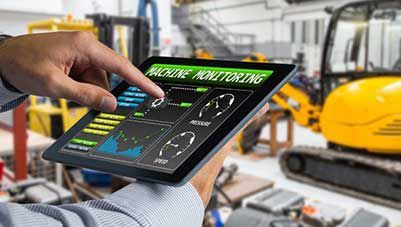
Unplanned downtime is among the largest sources of lost production. Modern equipment equipped with sensors and connectivity enables a shift from reactive or calendar-based maintenance to condition-based and predictive maintenance.
- Vibration and thermal monitoring detect early signs of bearing wear or motor degradation.
- Oil analysis and acoustic sensors identify lubrication failures before they cause damage.
- Machine learning models correlate sensor data with historical failures to predict remaining useful life.
The result is fewer catastrophic failures, extended asset lifespans, and maintenance scheduled around production windows rather than disrupting them.
Connect Equipment to a Unified Data Layer
Modern equipment generates enormous volumes of operational data. The value of that data, however, depends entirely on integration. Isolated machines produce isolated insights.
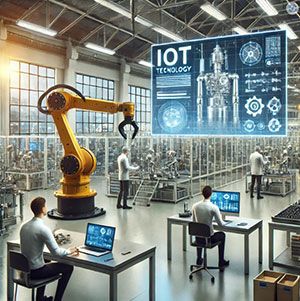
Deploying an Industrial Internet of Things (IIoT) architecture allows equipment to report performance, quality, and energy metrics to a centralized platform. From there, analytics can surface patterns invisible on the shop floor: subtle shifts in cycle time, correlations between ambient conditions and defect rates, or energy spikes that indicate inefficiency.
Key Integration Priorities
Optimize Changeovers and Flexibility
In an era of customization and shorter product lifecycles, efficiency increasingly means flexibility. Modern equipment supports this through:
- Digital setup instructions and recipe management that reduce human error during changeovers.
- Modular machine designs that allow rapid reconfiguration for different products.
- Automated changeover sequences that compress setup time from hours to minutes.
Reducing changeover time directly increases available production capacity without additional capital expenditure.
Invest in Workforce Enablement
Modern equipment does not diminish the role of people—it transforms it. Operators become process managers, analyzing dashboards and intervening where judgment is required. Training must keep pace.
Provide structured training on new equipment, encourage cross-functional skills, and involve frontline staff in continuous improvement initiatives. When operators understand how the equipment works and why data matters, they become the most effective optimization agents in the facility.
Measure, Iterate, and Scale
Efficiency gains are not a one-time event. Establish a continuous improvement loop:
| Measure | Track OEE, downtime, scrap, and energy use | Baseline OEE, MTBF, MTTR |
| Analyze | Identify losses and root causes | Downtime Pareto, defect rates |
| Improve | Deploy equipment upgrades and process changes | Cycle time, changeover time |
| Standardize | Document and replicate gains across lines | Throughput, cost per unit |
Reviewing these metrics on a regular cadence ensures that modernization remains a strategic discipline rather than a one-off capital project.
Conclusion
Modern equipment is a powerful enabler of production efficiency, but technology alone does not deliver results. The organizations that succeed are those that pair advanced machinery with disciplined measurement, thoughtful integration, and continuous workforce development. By starting with a rigorous baseline, embracing automation and predictive maintenance, connecting equipment to unified data systems, and committing to iteration, manufacturers can transform efficiency from an aspiration into a measurable, compounding advantage.